
If your water has a brown tint and your tap pressure keeps dropping, your home may be dealing with sediment, and this blog is exactly what you need.
Here, we’ll break down everything you need to know about types of sediment water filters - from microns and sizes to cartridge types - so you can choose the right one for your home.
What a Sediment Filter Does (And the Biggest Misconception About It)
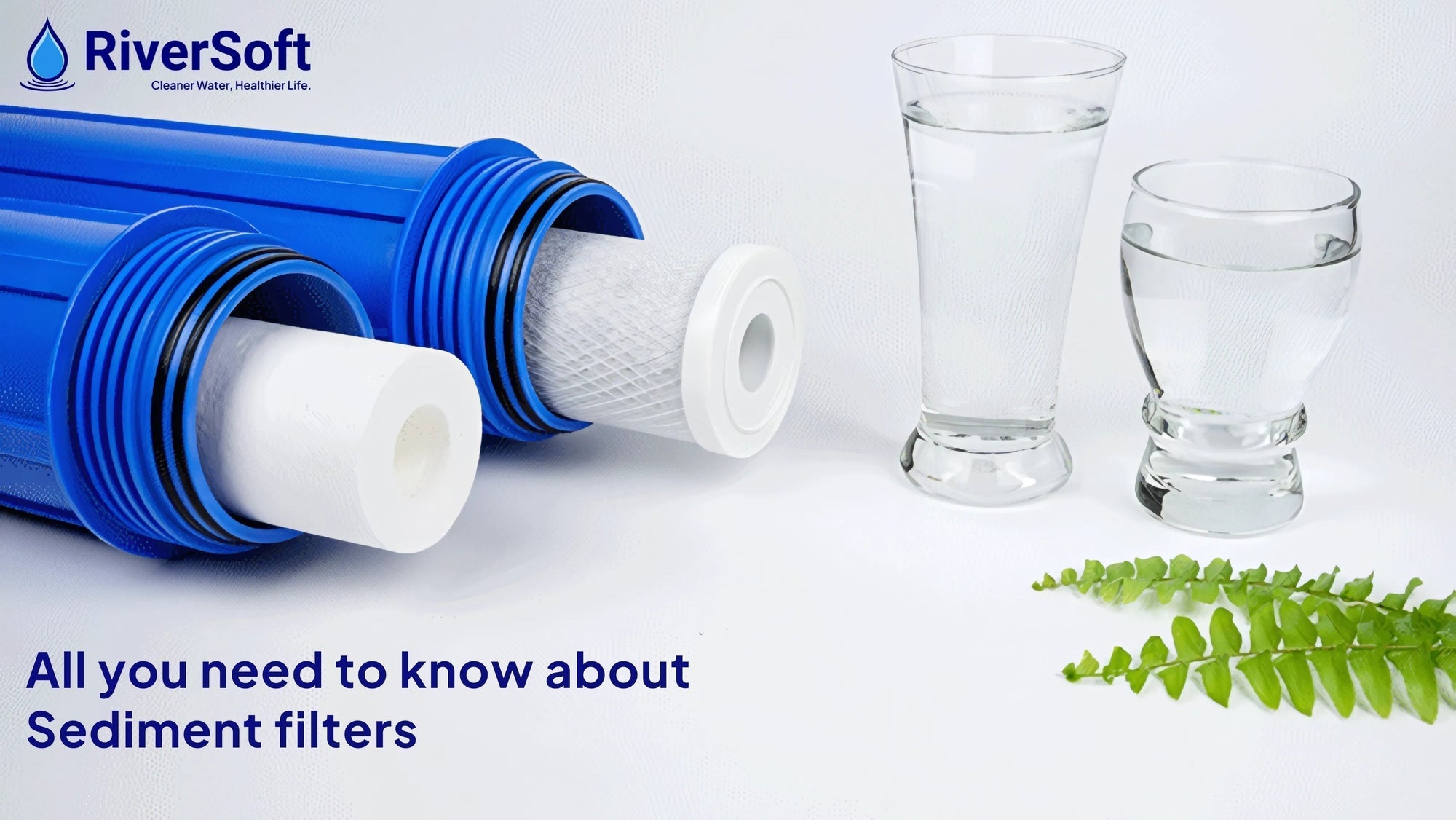
A sediment filter is a pre-filtration unit that removes physical impurities like dust, sand, rust, and silt from water. However, a common misconception is that sediment filters also soften water or reduce TDS - but they don’t. A sediment filter only filters suspended solids circulating in your water supply, allowing your RO or hard water purifier to work more efficiently.
Now, let’s look at the three main elements of a sediment filter:
Microns, filter sizes, and cartridges.
Micron Number Explained: How to Choose the Right Sediment Filter
A micron refers to the size of particles your filter can trap. This means the smaller the micron number, the better the filtration. Typically, filters come in these options:
-
20-micron filters: Best for trapping larger particles like sand, mud, and visible dirt.
-
5-micron filters: Traps finer impurities like rust and silt.
-
1-micron filters: Perfect for very tiny particles and RO protection.
That’s why we suggest using filters in stages. For most homes, a two-stage approach works best: start with a larger micron filter to block big particles, then add a smaller micron filter to remove finer ones.
During Monsoon Season
Monsoon months significantly increase water turbidity across India, especially for borewell and overhead tank supplies. During June to September, fine silt and mud enter the water supply at higher concentrations than at any other time of year.
If you are on a single 5-micron filter year-round, consider adding a 20-micron pre-filter during monsoon months to prevent rapid clogging. Households in cities like Bangalore, Hyderabad, and Pune, where borewell use is high, typically see filter replacement frequency double during this period.

Filter Sizes Explained: 10-Inch vs 20-Inch Sediment Filters
Sediment filters are labelled as 10-inch or 20-inch. The inch refers to the length (not the width), and it matters because the filter length determines how much water it can handle and how often you have to replace it. In short, the larger the filter, the better it manages water flow and sediment load.
So, which filter should you choose?
It depends on your setup and daily water use, for example:
-
10-inch filters work well for smaller systems like kitchen taps, bathroom, geysers, washing machines or RO pre-filters where water flow is moderate.
-
20-inch filters are ideal for main inlet lines, overtank, and borewell lines, as they can handle higher water flow and more sediment.
Now, let’s understand the cartridge of a sediment filter.
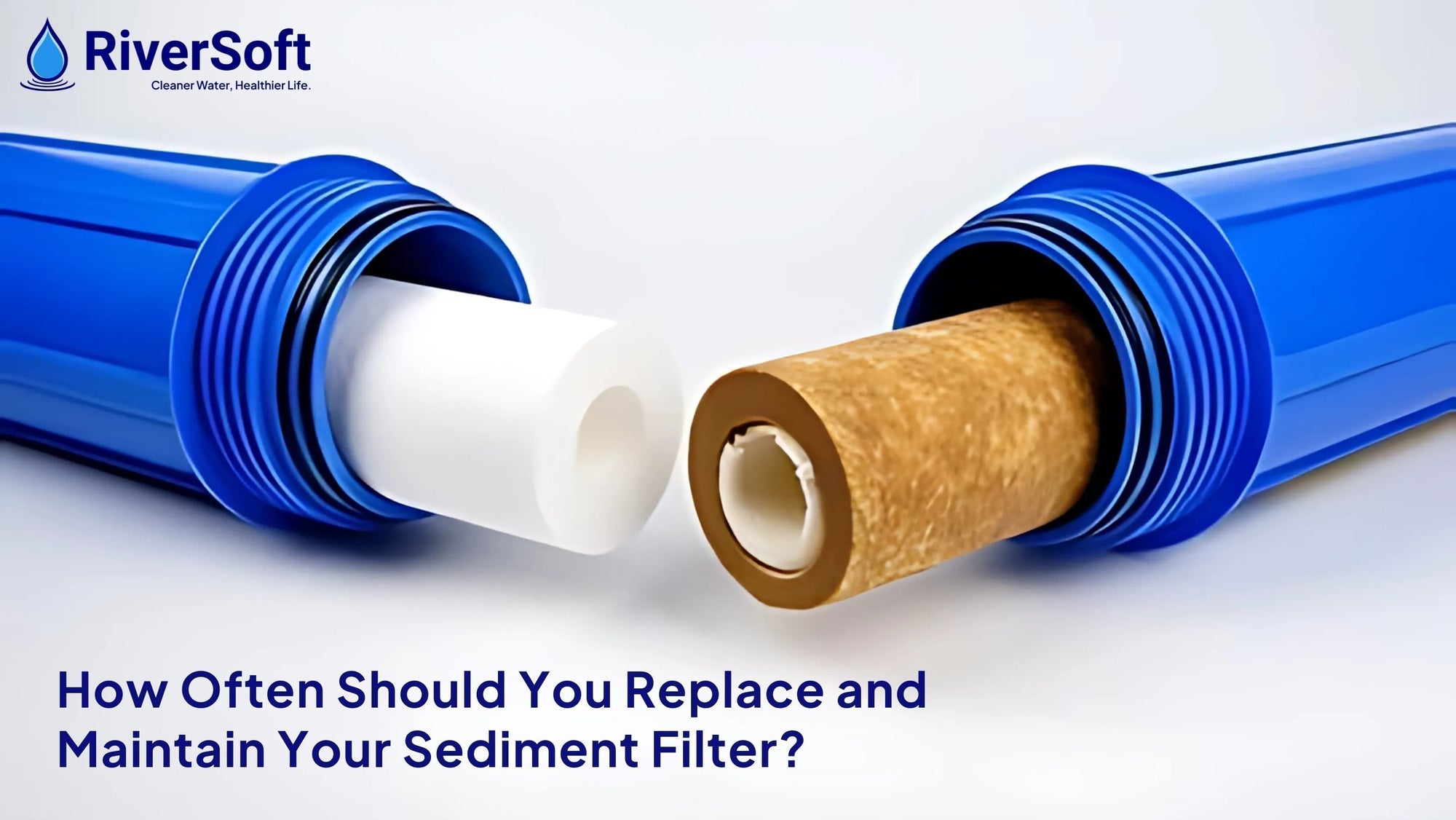
Cartridge Types Explained: Yarn, Filter Bag, and PP Spun
Every drop of clean water starts with the right cartridge; it traps dirt, sand, and rust from your water. Since every water source has its own impurities, different cartridges are made to handle different types of sediments. The three main ones are:
-
Yarn (String-Wound): Best for borewell water, as it traps larger particles like mud, sand, and rust first and finer particles deeper down
-
Filter Bag: Ideal for areas with heavy sediment, as it holds more dirt and debris before clogging.
-
PP Spun: Perfect for municipal or tanker water, as it captures fine dust and rust while maintaining steady water flow.
How often you need to replace your cartridge depends on your water quality. If your supply has more dust, rust, or sediment, you’ll need to replace it frequently.
How long your cartridge lasts depends on your water source, not just the filter type:
- Municipal water: PP Spun cartridge lasts 4–6 months on average
- Tanker water: 2–4 months; tanker water carries a higher silt and rust load
- Borewell water: 1–3 months; replace more frequently during monsoon season
- Borewell with two-stage setup: The 20-micron pre-filter takes the heavy load and extends the 5-micron filter's life to 3–4 months
A drop in water pressure or visible discolouration are the two clearest signs a cartridge needs replacement before the scheduled date.
How To Find the Right Type of Sediment Filter for Your Home
Here’s how:
-
Identify your water source: Does your water contain mud and rust? Then it’s borewell water. If you see more dust and silt, it’s likely municipal or tanker water. Knowing this matters because it helps you choose the right micron level.
-
Choose the right micron rating: For borewell water, go with a two-stage setup - a 20-micron pre-filter followed by a 5-micron filter. And for municipal or tanker water, you can opt for a single 5-micron filter.
-
Select your housing size: Most homes use a 10-inch filter for taps or smaller setups. For main lines or overhead tank - a 20-inch filter is a better choice as it supports higher water flow and provides longer-lasting performance.
-
Pick the right cartridge material: The right cartridge depends on the type of impurities and your water source. So, identify your water quality first, then refer to the cartridge section of this blog to find the one that matches your requirements.
At RiverSoft, we design a range of sediment filters specifically for Indian water conditions. Whether it’s borewell, municipal, or tanker water, you’ll find a filter that fits your home perfectly. With easy installation and affordable cartridge replacements, you can keep your water clean and your appliances protected. Check out Riversoft sediment water filters.
Conclusion
Now you know everything you need to choose the right type of sediment filter for your home. What a sediment filter does, how microns and sizes affect performance, and which cartridge suits your water type best. With this knowledge, you can confidently pick the perfect setup for your needs. And if you’re ready to make the switch, RiverSoft has filters made just for Indian homes - easy to install, affordable, and built to keep your water clear and your appliances protected.
































Ashutosh was inspired to solve water quality issues after witnessing the harmful effects of hard water on his family’s health and home. Recognizing the widespread impact of poor water quality, he committed to creating innovative solutions that ensure safe and clean water for everyone. He is an alumnus of IIT Delhi and IIM Ahmedabad, bringing a strong technical and managerial background to RiverSoft.