

Have you noticed your clothes come out of the wash looking clean but still feeling rough? Towels that were once soft now scratch your skin. Your washing machine has started smelling different than it did six months ago. Most people blame the detergent or the machine itself. But if your home runs on borewell or tanker water, the real problem is likely what is flowing into the machine before the wash even starts. That water is hard water, carrying more dissolved minerals than your machine was built to handle.
How Does Hard Water Damage Your Washing Machine?
Hard water carries dissolved calcium and magnesium that do not rinse away cleanly. Every wash cycle pushes these minerals through your machine's internal parts, and the damage builds quietly over time.
If your washing machine uses an internal heating element, the heating coil is usually the first to suffer. When hard water heats up inside the machine, minerals solidify into a limescale that coats the coil. This layer acts as insulation, forcing the coil to work harder and consume more electricity just to reach the same temperature. Over months, this can shorten the coil's life significantly. Hard water reduces appliance efficiency in ways most households only notice when the repair bill arrives.
The drum picks up a similar coating. Mineral residue sticks to the drum surface and transfers onto fabric during every cycle. This is why clothes feel stiff and colours look faded even when you use the right detergent. Rubber seals around the door collect mineral deposits too, leading to that musty smell that no amount of cleaning fully removes.
The result? A machine that runs less efficiently, uses more power, washes less effectively, and wears out years before it should.
What to Check Before Buying a Washing Machine Filter
Not every filter suits every home. Before you buy the best washing machine filter for hard water India, check these four things.
-
Your water source. Borewell and tanker water usually carry higher mineral content than municipal supply. If your building depends on a borewell, look for a filter built for heavier scale build-up, not a light-duty option.
-
Your machine type. Most washing machine filters fit standard inlet hoses used by fully automatic front-load and top-load machines. Semi-automatic machines with separate inlet pipes may need a different fitting, so check compatibility before buying.
-
Filtration stages. Most washing-machine filters available in the market focus on hard-water treatment and may not remove sediment like sand or rust. If your water contains both, choose a 2-stage filter with sediment filtration and hard-water treatment.
-
Cartridge replacement. Check how easy the cartridge is to access and replace. A filter that needs a plumber every time defeats the purpose of a DIY fix.
Which Washing Machine Filter Fits Your Water Type?
You do not need to guess your water hardness. A few quick checks tell you enough to choose the right washing machine filter.
Run your finger along the inside of the drum. A gritty or powdery film means limescale on washing machines has already started building up. If your detergent stopped foaming the way it used to, that is one of the most common laundry hard water problems linked directly to mineral content in your water.
For moderate hard water, a washing machine filter can help condition the incoming water and reduce the effects of hardness and scale on the machine. If the water has very high hardness and the issue affects the entire home, consider a whole-house hard water treatment system

The RiverSoft Washing Machine Filter Range
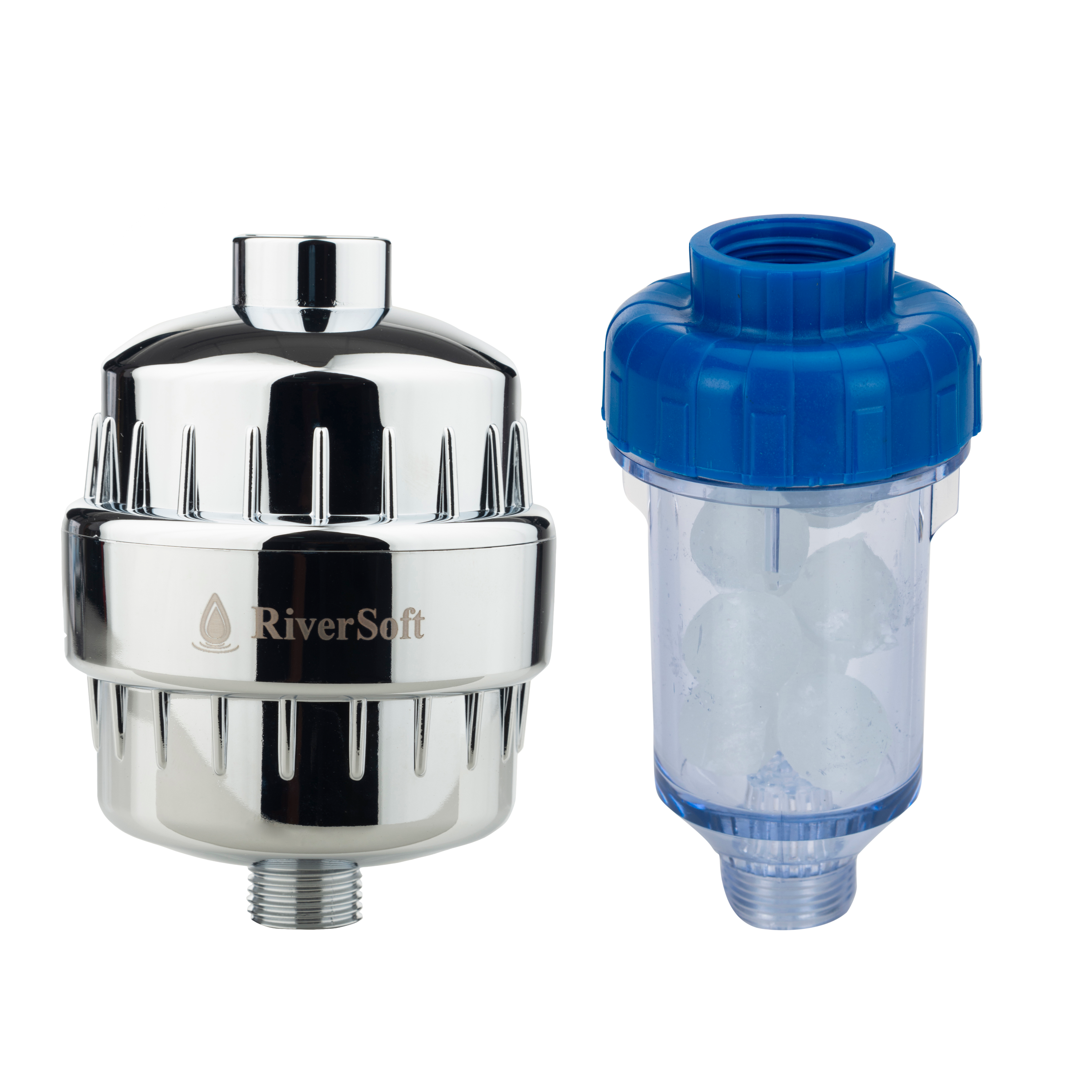
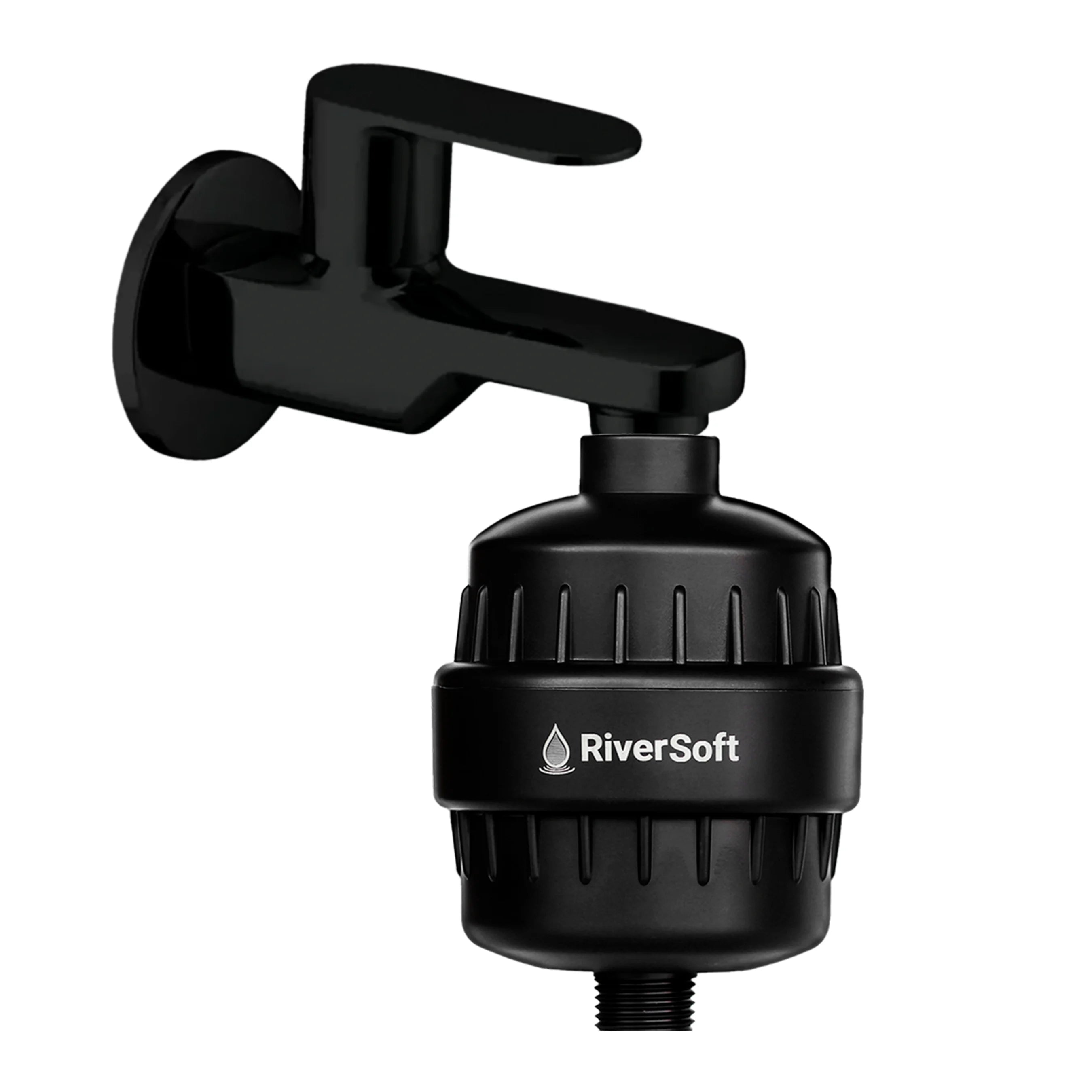
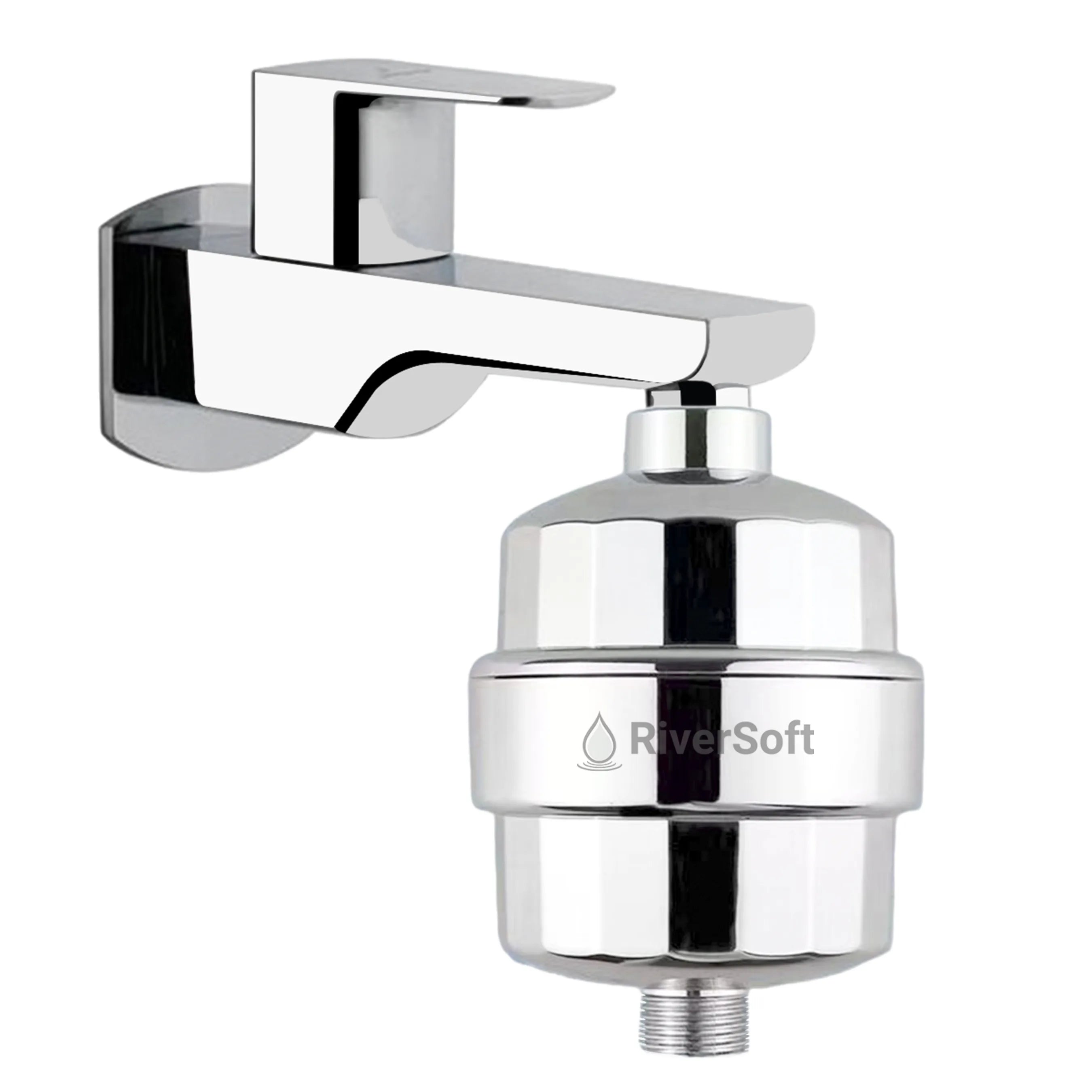
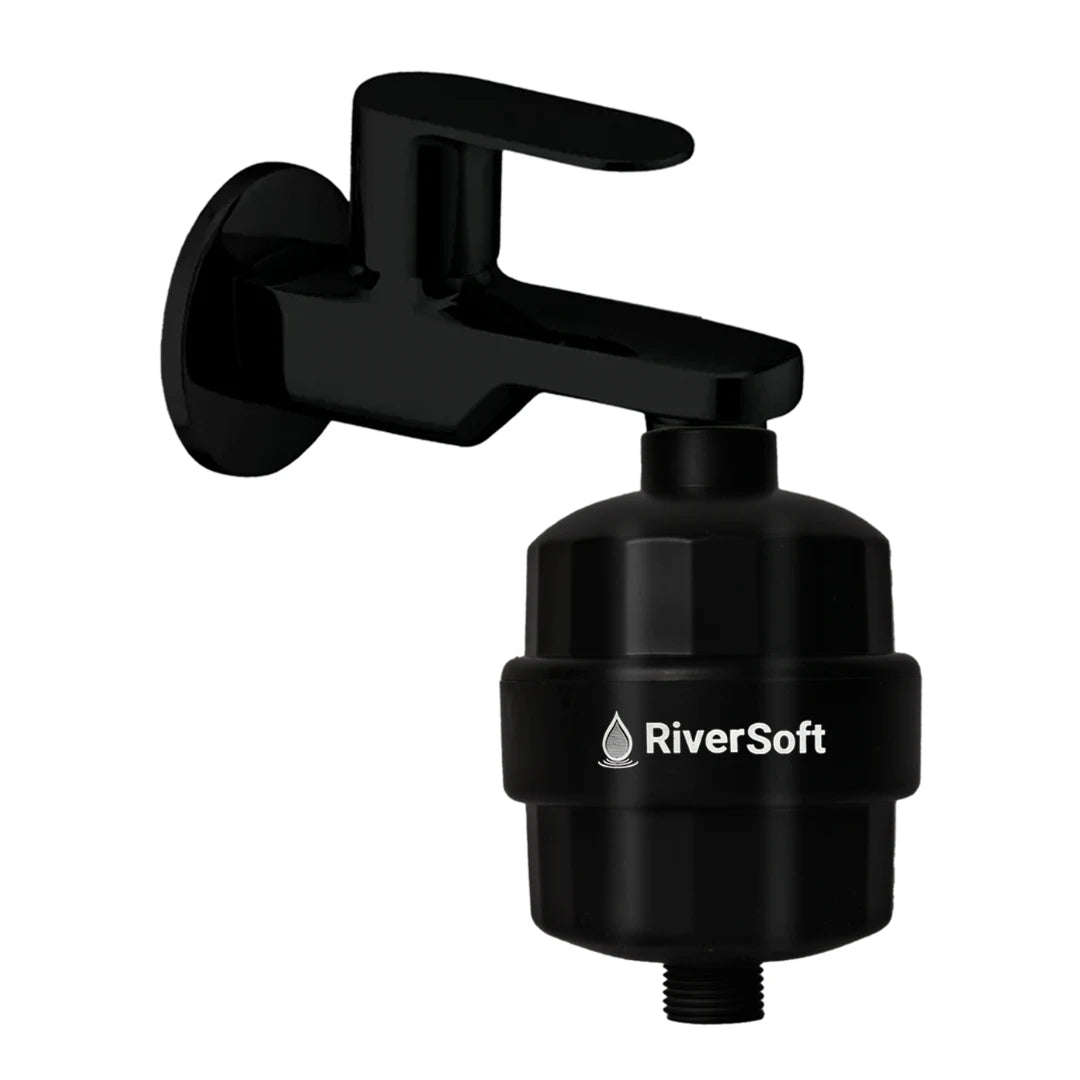
RiverSoft's washing machine filter uses two-stage protection designed specifically for Indian hard water conditions. The first stage is a stainless steel mesh that traps visible sediment like sand, rust, and debris before they enter the machine. The second stage uses Siliphos media, which helps condition hard water minerals so they remain suspended rather than forming scale on internal surfaces. To understand how a washing machine filter works at each stage, the principle is straightforward: stop the particles, then neutralise the minerals.
RiverSoft offers three options depending on your setup:
-
EBWF-04 EcoBlu - Bestseller with opaque housing and compact body. Fits most fully automatic machines and moderate hardness levels.
-
EBWF-04T EcoBlu Transparent - Same protection with a transparent housing, so you can visually check filter condition without opening it. Useful if you want to track cartridge wear.
Both filters are installed at the back of your washing machine in under 10 minutes. No plumber needed. Just connect the filter between the tap and the machine's inlet hose. Cartridges need replacement every 4 to 6 months, depending on your water hardness and wash frequency. Cleaning your washing machine filter between replacements takes a few minutes and extends cartridge life.
If your water also carries visible mud or sediment from a borewell, pairing the washing machine filter with a sediment filter at the tank level gives whole-house of protection.
These filters do not reduce the TDS of your water. They target limescale-causing minerals and physical sediment, which is a different concern from total dissolved solids.
Conclusion
Choosing the right washing machine filter isn’t just about filtering what you can see. It comes down to knowing your water source, checking your machine's compatibility, and picking a filter with real mineral-conditioning power, not just a sediment screen. Once installed, a filter helps protect your drum, heating coil and clothes, with cartridge replacement based on water hardness and wash frequency.


























Leave a Comment