

Search "best sediment filter," and you'll mostly find price lists and cartridge comparisons which fail to answer the real questions for homeowners. You need to know which filter actually protects your pipes, appliances, and downstream systems in Indian water conditions and which supports your motor capacity. Whether your supply comes from a borewell, a municipal line, or a tanker, sediment shows up differently in each. This guide breaks down what "best" really means for your specific setup.
What Makes a Sediment Filter "Best" for Your Home
The right sediment filter depends on your water source, your fittings and usage pattern. A filter built for light municipal turbidity won't hold up against heavy borewell sediment. And a filter sized ½ hp motor wont work for a large capacity motor.
Before comparing products, ask yourself three questions:
-
What's your water source? Borewell water usually carries more sand and silt than municipal supply.
-
How many fixtures need protection? A single tap filter only covers one point. A mainline sediment filter protects your entire home.
-
What's the pressure of water and what's the capacity of the motor being used.
-
What sits downstream? If you're protecting an RO unit, your sediment filter functions as a prefilter for RO systems and needs to match that flow rate.
Getting these answers right matters more than any brand comparison you'll find online.
Motor capacity and water pressure
A sediment filter normally sits before the whole house water tank and after the motor. The capacity of the motor decides the quality of body to use for the sediment filter. A high capacity motor will require a sturdy sediment filter which will hold up the pressure. Normally a motor capacity of les than 1 hp is low and does not require a heavy sediment filter body, but anything above 1 hp required a strong body. If this caution is not taken, it will lead to leakages and even bursting of the body.
Micron Rating and Size: The Two Numbers That Matter
Most price-comparison guides skip this part entirely. Micron rating tells you the smallest particle size the filter traps. Lower numbers catch finer sediment but clog faster. Higher numbers last longer but let smaller particles through.
For most Indian homes, here's a rough guide:
-
20 micron: A coarser option that can suit lighter sediment loads or first-stage filtration.
-
5 micron: A finer option that can suit water with heavier sediment loads, including some borewell supplies.
-
1 micron: An even finer option to remove sediment filters even invisible to eyes
Size matters just as much. There are 2 popular sizes, the 20 inch and 10 inch one. A mainline sediment filter sits at your main water inlet and filters everything entering your home. Depending on the volume flow the size can be decided. For higher flow or roughly a 3 bhk house a 20 inch is recommended and 1 BHK, a 10 inch one is fine.

Where Does a Sediment Filter Fit in Your Water Setup?
A sediment filter isn't a standalone purifier. It's the first line of defense before water reaches your RO unit, geyser, or overhead tank. Think of it as protection for everything that comes after it.
A sediment filter will fit in the mainline. Normally the mainline is 1 inch or ¾ inch. Search for a sediment filter with this fitting size. A ½ inch or more than 1 inch size in the filter will result in pressure drop so this has to be chosen correctly.
These filters do not reduce the TDS of your water.
This is where a lot of buying guides mislead readers. A sediment filter traps physical particles like sand, rust, and silt. It doesn't soften water, and it isn't built to replace a water softener or an RO purifier.
If high TDS in your drinking water is your main concern, an RO purifier handles that separately. If you're dealing with cloudy water, tank sediment, or particles damaging your washing machine and geyser, that's exactly what a mainline sediment filter is built for.
Sediment filters also differ from carbon filters in what they remove. If you're comparing the two, this breakdown of sediment versus carbon filtration explains where each one fits.
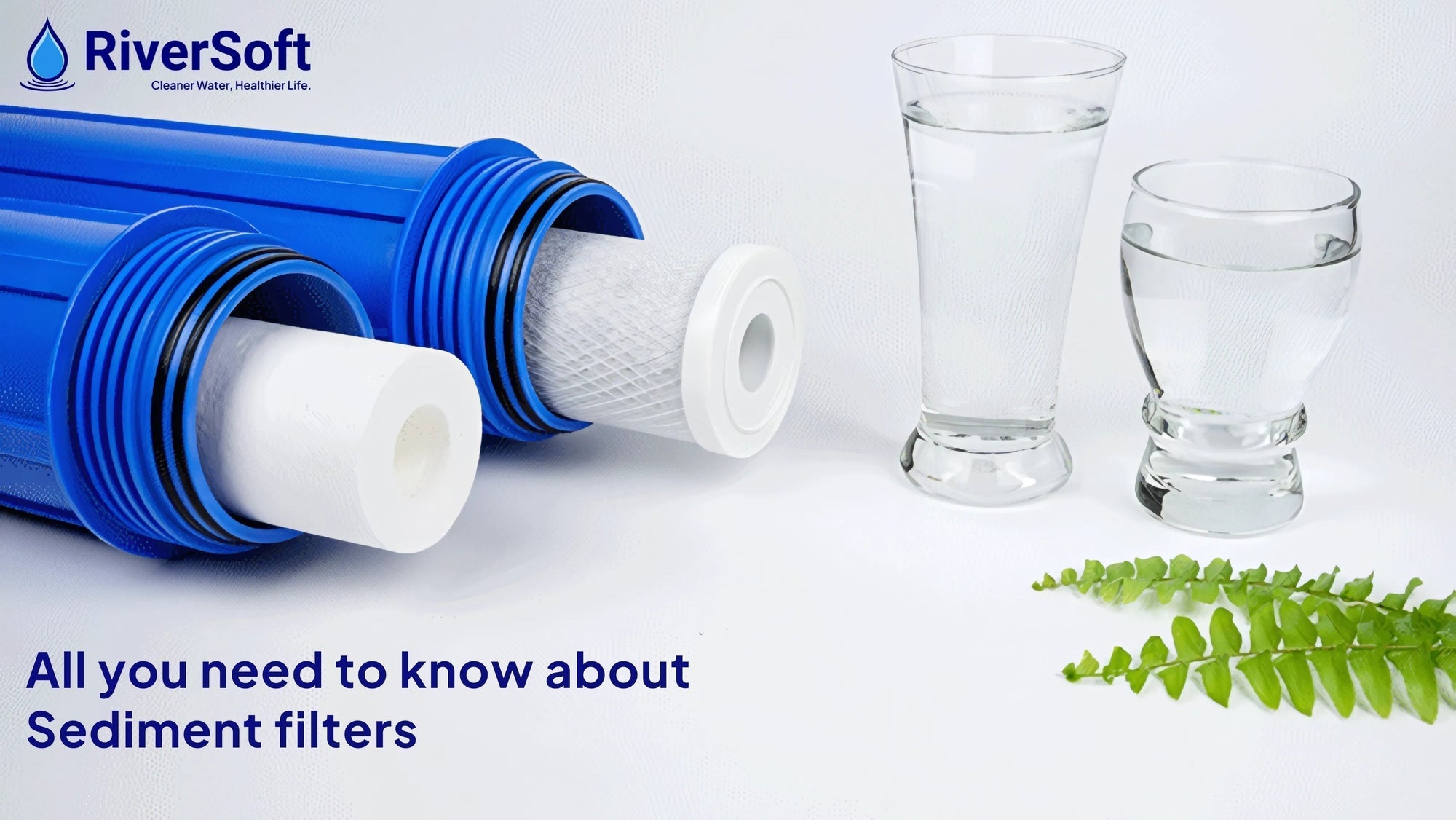
RiverSoft Sediment Filters
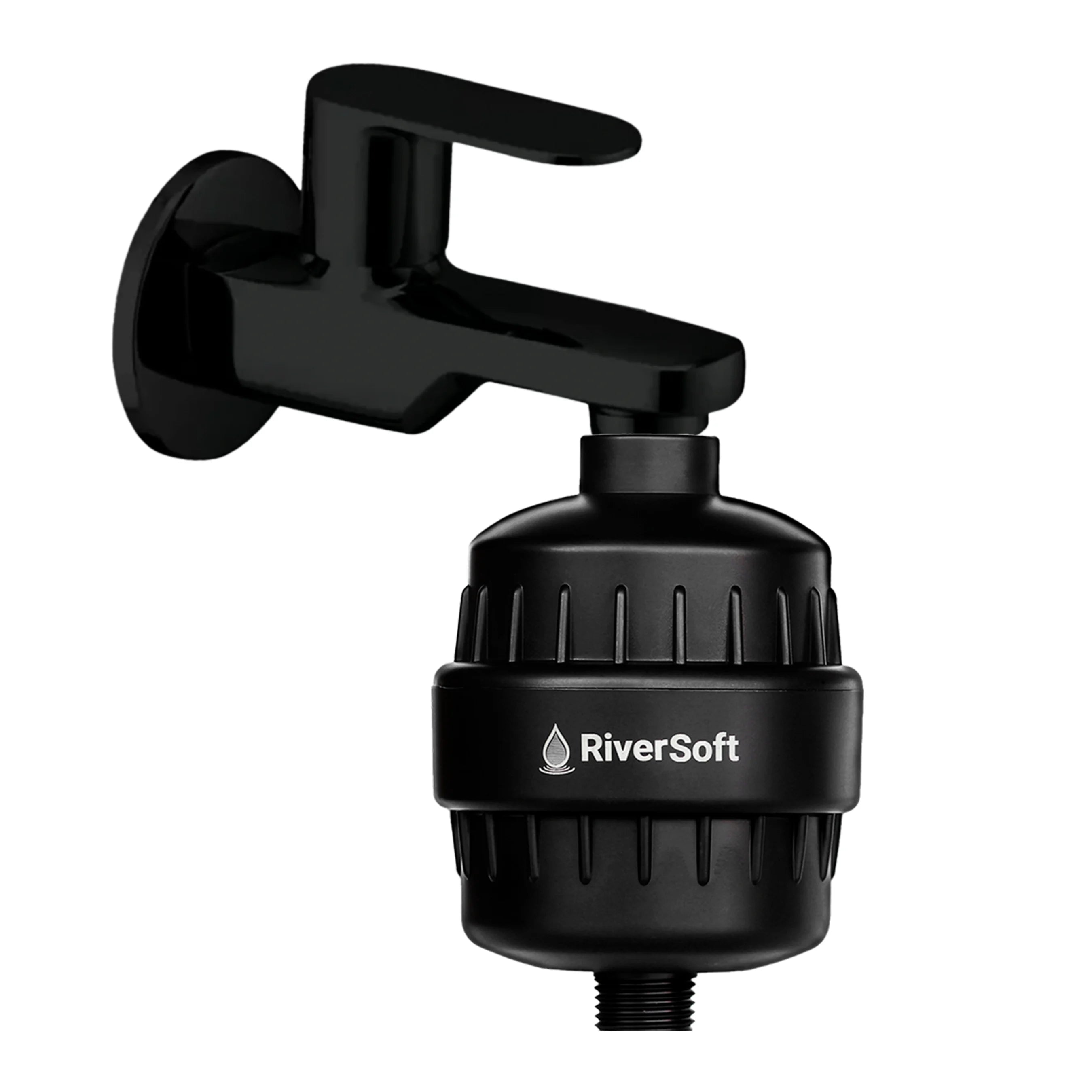
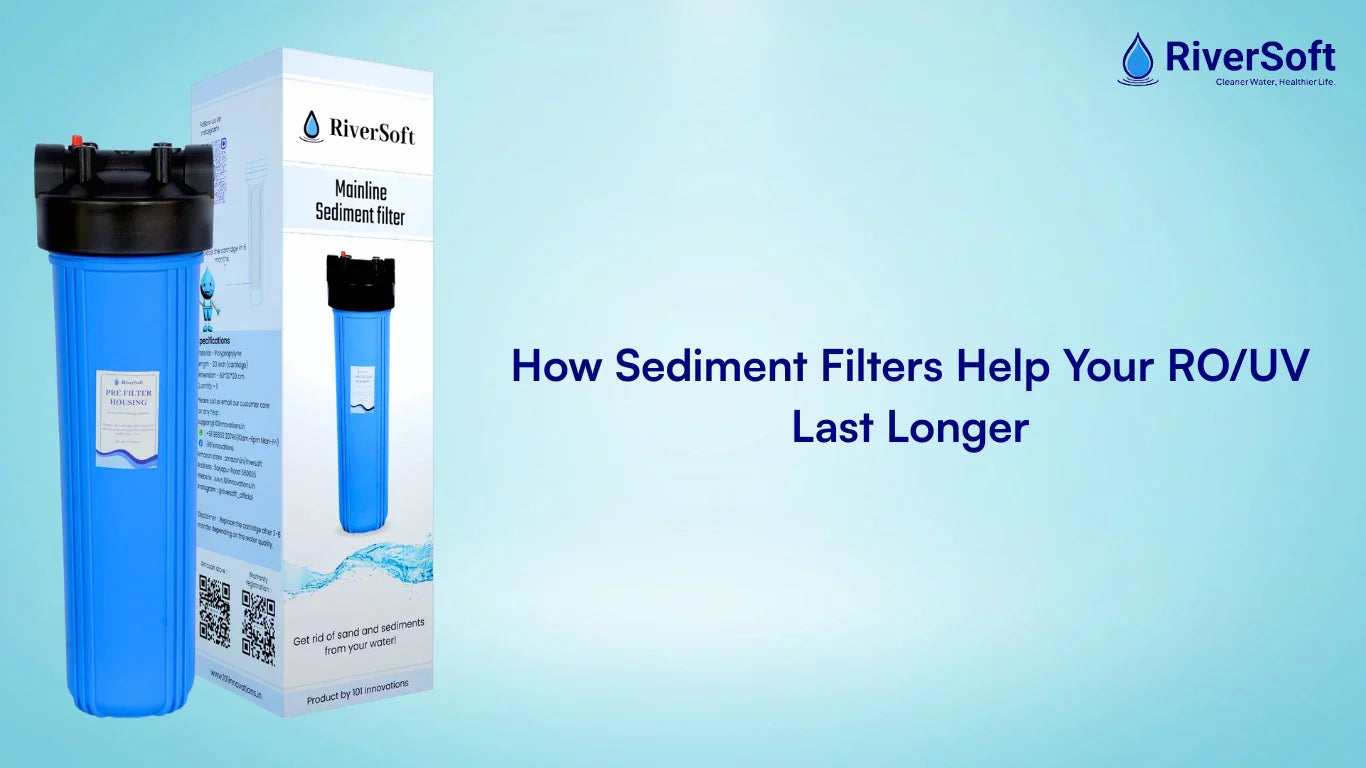
RiverSoft's mainline sediment filter installs at your main water inlet, so every tap and appliance in your home gets covered from one point.
-
ASP-20-HV1: 1 micron filter with heavy housing. Built for homes on municipal or mixed-source water, filtering out sand, rust, and silt before they reach your pipes.
-
ASP-20-HV5: A 5-micron spun-cartridge with heavy housing option for sediment filtration.
-
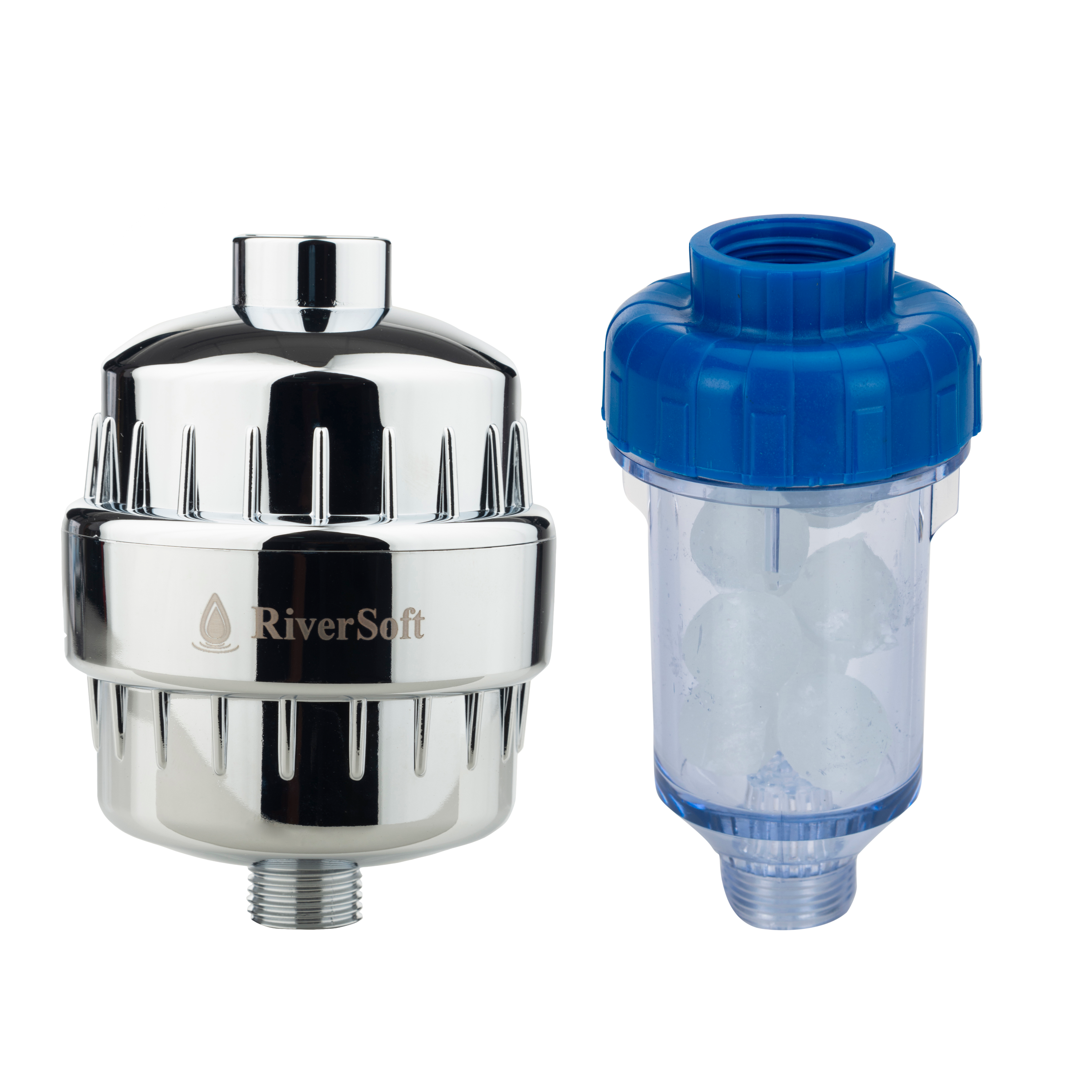
WTPF-01: A smaller sediment filter for mainline. Can be installed before a larger sediment filter, water softener to trap large particles. Comes with transparent housing. It is recommended for whole-house sediment protection.
-
AFB-20: Bag filter Suited for installation at the water tank inlet to protect the entire water system.
-
ASP-10-HV5: 10 inch filter heavy housing Perfect water filter for tank installations.
-
ASP-20HV-SI: ASP-20 with siliphos balls to remove scaling from water
-
AFB-10-1M: 10 inch bag filter with 1 micron filtration size.
-
RIVIQ MHW-20: Designed as a whole-house filtration system; conditions hard water and filters suspended particles up to 5 microns
-
RIVIQ MHW-20-2: Combines sediment filtration and hard water conditioning in Stage 1 with a 20-inch CTO carbon filter in Stage 2 for comprehensive mainline water filtration.
-
RIVIQ MHW-20-3: Combines hard water conditioning with GAC and CTO carbon filtration for multi-stage mainline water filtration. Designed for whole-house use across connected household outlets.
Installation may require plumber assistance for mainline fitting. Replacement timing varies by product and water quality, so check the relevant product page.
Final Thoughts
Choosing a sediment filter is about matching micron rating, size, and placement to your water source. Finer filtration may be useful for heavier sediment, while mainline placement provides broader household coverage. Sediment filters handle physical particles, not TDS reduction or water softening.




























Leave a Comment